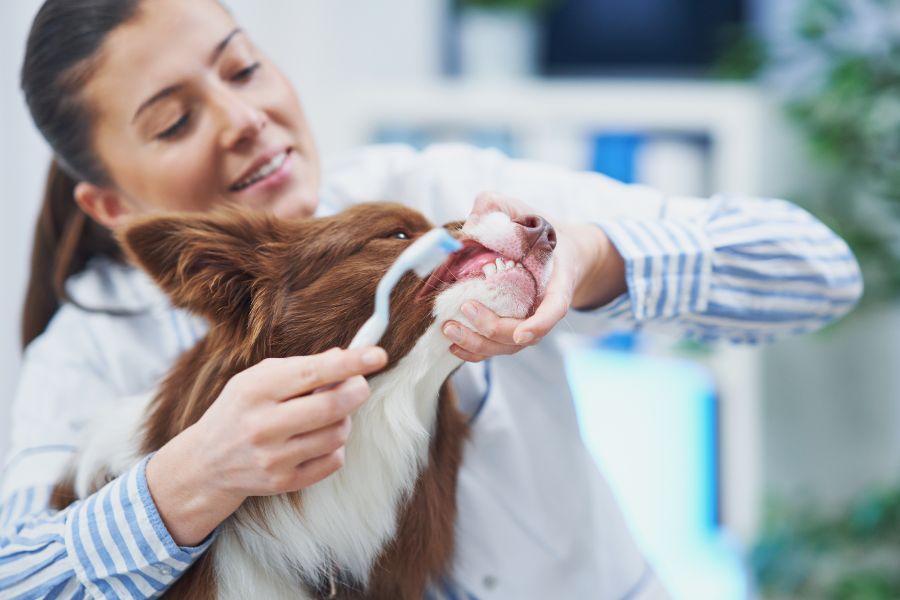



Your pet may have bad breath, chew differently, or seem less interested in food without making it obvious that something hurts. Dental problems can develop slowly, and many pets continue eating even when their mouth is uncomfortable. That is why knowing the signs of dental problems in pets matters. At Olde Towne Animal Hospital in Southampton, NY, veterinary professionals regularly help pet owners understand changes in eating, chewing, breath, and behavior that may point to an oral health concern. Some problems affect the gums, while others involve the teeth themselves. This guide covers 10 common dental issues, what signs to watch for, how veterinarians diagnose them, and what you can do at home to support healthier teeth and gums.
What Are the Most Common Dental Problems in Pets?
The most common dental problems in pets include plaque buildup, tartar, gum inflammation, periodontal disease, broken teeth, tooth infections, retained teeth, oral growths, painful chewing, and tooth loss. Many of these conditions develop gradually, so regular dental checks are important even when your pet seems healthy.
Some problems are easy to spot, such as a broken tooth or heavy tartar. Others can develop below the gumline where you cannot see them during a quick look at your pet’s mouth.
Here are 10 problems every pet owner should know:
- Plaque buildup
- Tartar and calculus
- Gingivitis
- Periodontal disease
- Broken or fractured teeth
- Tooth root infections
- Retained baby teeth
- Tooth loss
- Oral masses or growths
- Dental pain and difficulty chewing
Recognizing these problems early can help prevent discomfort and protect your pet’s overall well-being.
1. Plaque Buildup
Plaque is a sticky layer of bacteria that forms naturally on the teeth. It can develop soon after eating and becomes more difficult to manage when it is allowed to remain on the tooth surface.
Without regular dental care, plaque can harden into tartar. This creates a rough surface where more bacteria can collect, making the problem harder to control.
Watch for:
- Yellow or brown buildup on the teeth
- Bad breath
- Red gums
- Changes in chewing
- Increased drooling
Daily dental care can help reduce plaque accumulation. Your veterinarian can also recommend products and routines that fit your pet’s needs.
2. Tartar and Calculus
Tartar, also called calculus, develops when plaque hardens on the teeth. Unlike soft plaque, established tartar generally cannot be removed simply by brushing at home.
Heavy tartar can irritate the gums and contribute to more serious dental disease. It may also hide problems underneath the gumline.
During a dental examination, a veterinarian looks for the amount and location of tartar as well as changes in the surrounding gums. If significant buildup is present, professional dental cleaning may be recommended.
Keeping an eye on your pet’s teeth between veterinary visits can help you notice when buildup is becoming more noticeable.
3. Gingivitis
Gingivitis is inflammation of the gums. It can cause gums to appear red, swollen, or more sensitive than normal.
Some pets with gingivitis have bad breath or may pull away when their mouth is touched. Others show very few obvious signs.
Common signs include:
- Red or swollen gums
- Bleeding around the gums
- Bad breath
- Drooling
- Reluctance to chew hard food or toys
Gingivitis can sometimes improve when the underlying plaque and tartar are addressed. However, leaving gum inflammation untreated can allow dental disease to progress.
4. Periodontal Disease
Periodontal disease affects the tissues that support the teeth. It can begin with plaque and gum inflammation and gradually progress beneath the gumline.
As the condition advances, the structures holding the teeth in place can become damaged. In severe cases, teeth may become loose or fall out.
Signs can include:
- Persistent bad breath
- Red or bleeding gums
- Receding gums
- Loose teeth
- Difficulty chewing
- Dropping food
- Changes in eating habits
The visible part of a tooth does not always show how serious the problem is. A veterinary dental examination can help identify concerns that may not be obvious at home.
5. Broken or Fractured Teeth
Pets can break teeth while chewing hard objects, during rough play, or after an injury. A fractured tooth may expose sensitive inner structures and become painful.
Some pets continue eating despite a broken tooth. That does not mean the injury is harmless.
You may notice:
- Chewing on one side of the mouth
- Dropping food
- Avoiding hard treats
- Pawing at the mouth
- Excessive drooling
- Facial swelling
If you notice a cracked or broken tooth, schedule a veterinary examination. Treatment depends on which tooth is affected and how much damage has occurred.
6. Tooth Root Infections
A damaged or diseased tooth can develop an infection around its root. This may occur after a fracture exposes the inner part of the tooth or when advanced dental disease reaches deeper tissues.
Pain and swelling are possible signs. Some pets may also develop swelling below an eye or along the face, depending on which tooth is affected.
A veterinarian may recommend dental imaging to look below the gumline and assess the tooth root. Treatment may involve removing the affected tooth or addressing the damaged tooth in another appropriate way.
Because tooth root problems can be painful, unexplained facial swelling should not be ignored.
7. Retained Baby Teeth
Puppies and kittens normally lose their baby teeth as adult teeth develop. Sometimes a baby tooth remains in place even after the corresponding adult tooth has appeared.
This can crowd the mouth and create areas where food and bacteria collect. Small breeds and certain individual pets may be more prone to this problem.
During routine examinations, your veterinarian can check whether your young pet’s teeth are developing normally.
Early attention can help prevent crowding and other complications. Owners should not try to pull a retained tooth at home.
8. Tooth Loss
Tooth loss can occur because of advanced dental disease, injury, infection, or other oral problems. A loose tooth may be painful even if your pet continues eating.
Signs that may accompany a problematic tooth include bad breath, bleeding gums, chewing changes, or reluctance to have the mouth touched.
A missing tooth should not automatically be considered normal, especially in an adult pet. Your veterinarian can examine the area and determine whether additional dental disease is present.
In some cases, a tooth may have fallen out because the surrounding support structures were already severely damaged.
9. Oral Masses or Growths
Not every lump in a pet’s mouth is caused by dental disease. Some growths can develop on the gums, lips, tongue, or other oral tissues.
An oral growth may appear as a raised area, unusual swelling, discoloration, or a mass that seems different from the surrounding tissue.
Have your veterinarian evaluate:
- A new lump in the mouth
- Persistent swelling
- Unexplained bleeding
- A sore that does not heal
- A sudden change in the shape of the gums
- Difficulty eating associated with an oral growth
Some oral masses are harmless, while others require further testing. A veterinary examination is the best way to determine what a new growth means for your pet.
10. Dental Pain and Difficulty Chewing
Dental pain is one of the most important signs owners should watch for. Pets often hide discomfort, so subtle changes can be meaningful.
A pet with mouth pain may still approach the food bowl but chew slowly, drop food, favor one side, or walk away after attempting to eat.
A hypothetical example shows how this can look: a middle-aged dog began leaving dry food behind and chewing only on one side of the mouth. During the veterinary examination, the veterinarian noticed significant gum inflammation and a damaged tooth, then recommended further dental evaluation. After appropriate treatment, the dog’s appetite and normal chewing behavior returned.
The lesson is simple: a change in eating behavior can sometimes be an early clue to a painful dental problem.
How Do Vets Diagnose and Treat Dental Problems in Pets?
Veterinarians start with an oral examination and look at the teeth, gums, tongue, and surrounding tissues. Depending on what they find, a more detailed dental evaluation may be needed to identify disease below the gumline.
Treatment depends on the specific condition and its severity. Options may include professional cleaning, treatment of damaged teeth, removal of unhealthy teeth, or other care recommended after examination.
A veterinary dental visit may include:
- Reviewing changes you have noticed at home.
- Examining the mouth and gums.
- Checking for loose, damaged, or abnormal teeth.
- Assessing areas that may require closer evaluation.
- Recommending appropriate treatment.
- Providing home dental care guidance.
Your veterinarian can explain each recommendation and help you understand what your pet needs.
What Can Pet Owners Do to Protect Dental Health?
Good dental care starts at home, but it works best as part of regular veterinary care. The goal is to limit plaque buildup and catch problems before they become painful or difficult to treat.
Helpful habits include:
- Brush your pet’s teeth regularly with products made for pets.
- Introduce brushing gradually and calmly.
- Check your pet’s mouth for visible changes.
- Pay attention to bad breath.
- Watch for changes in chewing or eating.
- Follow your veterinarian’s dental care recommendations.
- Avoid extremely hard objects that could fracture teeth.
Never force a toothbrush into your pet’s mouth if they are frightened or painful. A veterinarian can help you create a safer approach if brushing is difficult.
When Should You See a Vet About Your Pet’s Teeth?
Some dental concerns can wait for a scheduled appointment, while others need prompt attention. Severe pain, facial swelling, significant bleeding, or difficulty eating should not be ignored.
Contact a veterinarian promptly if your pet has:
- Facial or mouth swelling
- Significant bleeding
- A broken tooth
- A loose tooth
- Severe bad breath with other symptoms
- Trouble eating or drinking
- Sudden difficulty chewing
- Excessive drooling
- A new oral lump
- Signs of significant mouth pain
Even when your pet is eating normally, regular dental examinations remain valuable. Many dental problems develop quietly before they cause obvious changes at home.
Conclusion
Dental health is an important part of your pet’s overall care, and problems can develop even when your pet appears perfectly normal. Plaque, tartar, gingivitis, periodontal disease, broken teeth, infections, retained teeth, and other oral concerns can cause discomfort and affect how your pet eats and behaves. Regular veterinary examinations, appropriate home dental care, and attention to changes in chewing or appetite can help catch problems earlier. If you notice signs of dental problems in pets and are searching for a vet near you, contact Olde Towne Animal Hospital in Southampton, NY, which can evaluate your pet’s mouth and discuss appropriate care. Do not wait for obvious pain before addressing oral health. Early attention can make dental care easier and more comfortable for your pet.
FAQs
Q1: What are the most common dental problems in pets?
A: Common issues include plaque, tartar, gingivitis, periodontal disease, broken teeth, tooth root infections, retained baby teeth, and tooth loss. Oral growths and dental pain can also occur.
Q2: What are the signs of dental problems in pets?
A: Bad breath, red or bleeding gums, excessive drooling, difficulty chewing, dropping food, loose teeth, and changes in eating habits can all be warning signs. Some pets show very subtle changes.
Q3: How are dental problems treated in dogs and cats?
A: Treatment depends on the condition and its severity. A veterinarian may recommend professional dental cleaning, treatment for damaged teeth, removal of unhealthy teeth, or other appropriate care.
Q4: How often should my pet have a dental checkup?
A: Your veterinarian can recommend a schedule based on your pet’s age, dental health, and individual risk factors. Pets with existing dental concerns may need more frequent evaluations.
Q5: When should I take my pet to the vet for a dental problem?
A: Contact a veterinarian if your pet has facial swelling, significant bleeding, a broken or loose tooth, trouble eating, or signs of significant mouth pain. A new oral lump should also be evaluated.