


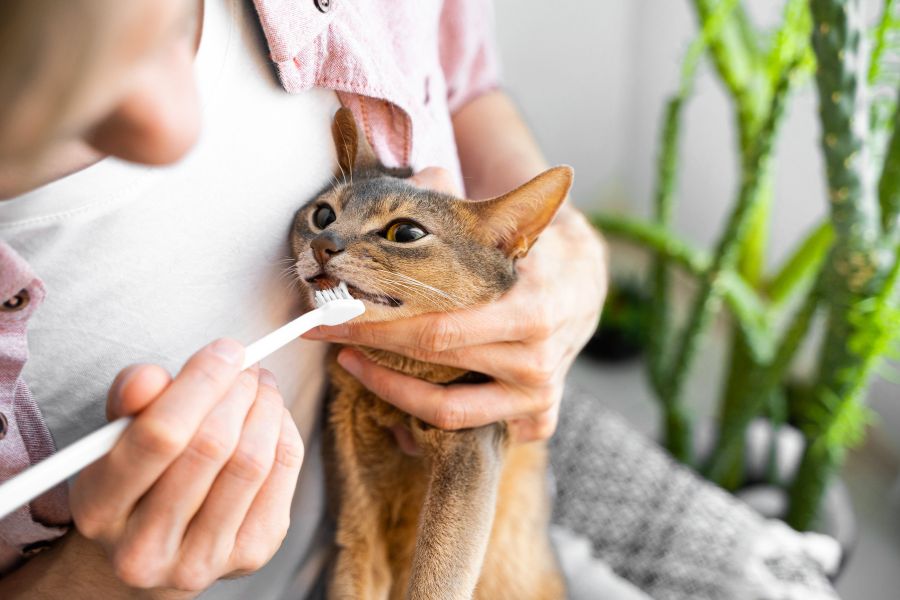
Just like people, cats need regular dental care to stay healthy. Unfortunately, many cat owners skip brushing because they believe it is too difficult or stressful. The good news? You can brush your cat’s teeth in just 3–5 minutes a day, even if you have a busy schedule. With a simple routine and the right approach, brushing your cat’s teeth can help prevent plaque buildup, reduce the risk of gum disease, and keep your cat feeling comfortable and healthy. This step-by-step guide will show you how to brush your cat’s teeth quickly, gently, and effectively, even if your cat has never had their teeth brushed before.
Why Brushing Your Cat’s Teeth Is So Important
Dental disease is one of the most common health problems in cats. By the age of three, many cats already show signs of plaque buildup, gingivitis, or tooth decay. Because cats are very good at hiding pain, dental issues often go unnoticed until they become severe.
Benefits of Brushing Your Cat’s Teeth:
Prevents Plaque and Tartar Buildup
Brushing removes food particles and bacteria before they harden into tartar, which cannot be removed without professional cleaning.
Reduces Gum Disease
Healthy gums mean less pain, inflammation, and tooth loss.
Improves Breath
Bad breath in cats is often a sign of dental disease. Brushing helps keep their mouth fresh.
Supports Overall Health
Bacteria from the mouth can enter the bloodstream and affect the heart, liver, and kidneys. Good pet dental care protects your cat’s whole body.
Spending just a few minutes a day can make a lifelong difference in your cat’s health.
Step 1: Gather the Right Tools
Having everything ready before you start makes brushing quick and stress-free.
What You’ll Need:
Cat Toothbrush or Finger Brush
Use a toothbrush designed for cats. These have soft bristles and smaller heads that fit comfortably in a cat’s mouth.
Cat-Safe Toothpaste
Never use human toothpaste. Choose toothpaste made specifically for cats. These are safe to swallow and come in flavors like chicken or fish.
Soft Towel or Cloth
A towel can help gently wrap your cat if needed and clean up afterward.
Keeping these items nearby helps you finish brushing in under five minutes.
Step 2: Help Your Cat Feel Calm and Safe
The key to brushing a cat’s teeth successfully is patience and comfort. Cats respond best when they feel safe and unforced.
Tips to Keep Your Cat Relaxed:
Choose a Quiet Space
Pick a calm area where your cat already feels comfortable, such as a couch or bed.
Go Slowly
If your cat is new to tooth brushing, start by gently touching their mouth or lifting their lips for a few seconds.
Use Positive Reinforcement
Praise your cat and offer a small treat afterward so they associate brushing with something good.
Some cats may need a few days or weeks to adjust, and that’s normal.
Step 3: Introduce the Toothpaste
Before using the toothbrush, let your cat taste the toothpaste.
How to Do This:
- Put a small amount on your finger
- Let your cat lick it
- Keep the experience calm and positive
This helps your cat accept the flavor and reduces resistance when brushing begins.
Step 4: Brush Gently in Small Circles (3–5 Minutes)
Once your cat is comfortable, it’s time to brush.
How to Brush Your Cat’s Teeth:
- Lift your cat’s lip gently
- Focus on the outside surfaces of the teeth (this is where plaque builds up most)
- Use small, gentle circular motions
- Start with the front teeth and move toward the back
You do not need to brush every tooth perfectly. Even brushing a few teeth each session is beneficial.
Time Breakdown:
- 30–45 seconds on one side
- 30–45 seconds on the other side
- Total time: 3–5 minutes
Always stop if your cat becomes stressed and try again later.
Step 5: Wipe, Praise, and Reward
After brushing, use a soft cloth to wipe away excess toothpaste. Most cat toothpastes do not require rinsing.
End on a Positive Note
- Offer praise
- Give a favorite treat or toy
- Keep the mood calm and relaxed
This final step helps your cat accept brushing as part of their routine.
How Often Should You Brush Your Cat’s Teeth?
Ideally, you should brush your cat’s teeth daily. However, brushing 3–4 times per week still provides meaningful benefits. Brushing at home should always be combined with regular veterinary checkups. If you are searching for a “vet near me” or a trusted “veterinary hospital near me” in Southampton, NY, Olde Towne Animal Hospital is here to provide you with quality pet dental services.
When Professional Dental Care Is Needed
Even with regular brushing, cats may still need professional dental cleanings to remove tartar below the gumline. At Olde Towne Animal Hospital, our veterinary team provides complete pet dental care, including exams, cleanings, and treatment of dental disease. Visiting an animal hospital for routine dental care can prevent pain and serious health problems.
Brushing your cat’s teeth in just 3–5 minutes a day is one of the easiest ways to protect their long-term health. With a gentle routine, the right tools, and consistency, dental care can become a simple part of your cat’s life.
If you need guidance on brushing techniques or are looking for professional dental services in Southampton, NY, schedule an appointment today. Our team is happy to help keep your cat comfortable, healthy, and smiling.
FAQs
1. Do cats really need their teeth brushed?
Ans: Yes. Brushing helps prevent plaque, gum disease, and tooth loss. It is one of the most important forms of pet dental care.
2. How do I know if my cat has dental problems?
Ans: Signs include bad breath, drooling, red gums, difficulty eating, or pawing at the mouth. A visit to a veterinary hospital near me can help diagnose issues early.
3. What if my cat refuses tooth brushing?
Ans: Go slowly and try brushing for just a few seconds at first. Dental treats and professional cleanings can help if brushing is not possible.
4. How often should my cat have dental cleanings at the vet?
Ans: Most cats benefit from annual dental exams and cleanings, depending on their oral health.
5. Can dental treats replace brushing?
Ans: Dental treats can help reduce plaque, but they do not replace brushing or professional veterinary care.
6. What does pet dental care include for cats and dogs?
Ans: Pet dental care includes oral exams, professional cleanings, and treatment for dental issues to support your pet’s overall health.