Why Is My Pet’s Eye Suddenly Red or Swollen?
Sudden eye redness or swelling in pets can result from irritation, an injury, infection, allergies, or a problem affecting the eye itself. Because eye conditions can worsen quickly and may threaten vision, contact a veterinarian promptly if your pet develops a red, swollen, painful, or cloudy eye. Seek urgent veterinary care if your pet cannot open the eye, has severe pain, or experiences a sudden change in vision.
Your pet may rub their face against furniture, squint, blink repeatedly, or paw at an uncomfortable eye. Sometimes, redness is the first sign you notice, even when your pet otherwise seems normal. At Olde Towne Animal Hospital in Southampton, NY, we encourage pet owners to take sudden eye changes seriously rather than waiting to see if they disappear. Understanding possible causes and warning signs can help you decide what to do next.
What Are the Signs of an Eye Problem in Dogs and Cats?
Eye problems can look different depending on the cause. One pet may have mild redness, while another may develop swelling, discharge, or noticeable pain. Because pets cannot explain what they feel, changes in their eyes and behavior are important clues.
Signs to watch for
- Redness in the white part of the eye or around the eyelids
- Swelling of the eyelids or tissues surrounding the eye
- Squinting, frequent blinking, or keeping one eye closed
- Watery eyes or unusual discharge
- Yellow or green discharge around the eyelids
- Cloudiness, a bluish appearance, or a visible change in the eye
- Pawing at the face or rubbing the eye against furniture
- Sensitivity to bright light
- A difference in pupil size or the way the eyes look
- Bumping into objects or seeming unable to see normally
Some signs may be subtle. A cat may hide more than usual, while a dog may become reluctant to go outside in bright sunlight. You may also notice that your pet avoids having their face touched.
Pay attention to whether one eye or both eyes are affected and when the changes began. Do not try to examine the eye by forcing the eyelids open, especially if your pet appears painful. A veterinary examination can help determine whether the problem involves the eyelids, the surface of the eye, or deeper structures.
What Causes Sudden Eye Redness or Swelling in Pets?
Several conditions can cause eye redness or swelling, and their treatments differ. An eye that looks mildly irritated may have a more serious problem beneath the surface, so appearance alone cannot reliably tell you how severe the condition is.
1. Irritation from dust or debris
Dust, dirt, grass, and other small particles may irritate the eye. Pets that spend time outdoors may develop watering, redness, or frequent blinking after running through grass or brush.
Do not try to remove an object that appears stuck to the eye or embedded in the tissue. If your pet continues squinting or rubbing the eye, contact a veterinarian. Persistent discomfort may indicate a scratch or another problem that needs treatment.
2. Conjunctivitis
Conjunctivitis is inflammation of the tissue lining the eyelids and covering part of the eye. It may cause redness, watering, swelling, or discharge. Irritation, infection, allergies, and other eye conditions can contribute to these signs.
Because several problems can look similar, do not assume that redness is simple conjunctivitis. Your veterinarian will assess the eye and determine whether testing or medication is appropriate.
3. A scratch or injury
Pets can scratch an eye while playing, exploring bushes, or interacting with another animal. A scratch on the clear surface of the eye, called the cornea, can cause pain, squinting, watering, and sensitivity to light.
Corneal injuries may worsen if a pet repeatedly rubs the eye. Seek prompt veterinary advice if you suspect an injury, even if you cannot see a wound.
4. Allergies or irritation around the eyelids
Environmental allergens or contact with irritating substances may cause redness, itching, or swelling around the eyes. Some pets also develop skin irritation elsewhere, such as on the face or paws.
However, sudden swelling around one eye may also result from an injury, insect sting, or another condition. A veterinarian can help distinguish these possibilities.
5. More serious eye conditions
Conditions such as glaucoma, which involves increased pressure inside the eye, or inflammation within the eye can cause redness, pain, cloudiness, and vision changes. These conditions may need urgent treatment to protect sight.
A suddenly enlarged or cloudy eye, severe pain, or a change in pupil appearance should never be ignored. Do not wait for the eye to become more swollen before contacting a veterinarian.
What Should You Do if Your Pet’s Eye Becomes Red or Swollen?
The safest first step is to prevent further irritation and contact your veterinarian for guidance. Eye conditions can be difficult to assess at home, and the wrong treatment may make the problem worse.
Safe steps to take
- Keep your pet from rubbing the eye. If you already have an appropriate protective collar, use it if your pet tolerates it safely.
- Move your pet away from possible irritants. Keep them away from dust, smoke, cleaning products, and outdoor debris.
- Avoid touching the eye. Do not press on the eyelids or attempt to remove an embedded object.
- Call your veterinarian. Explain when the symptoms started and whether you have noticed pain, discharge, or vision changes.
- Follow veterinary instructions. Use only eye products or medications recommended for your pet’s current problem.
Do not use human eye drops, leftover pet medication, or ointments without veterinary direction. A product that helped with a previous eye problem may be unsuitable for the current condition. Steroid-containing eye medications, in particular, can worsen certain corneal injuries.
If a chemical cleaning product has entered your pet’s eye, contact a veterinarian immediately for instructions on safe rinsing and further care. Do not delay while searching for a home remedy.
How Do Veterinarians Diagnose and Treat Eye Problems?
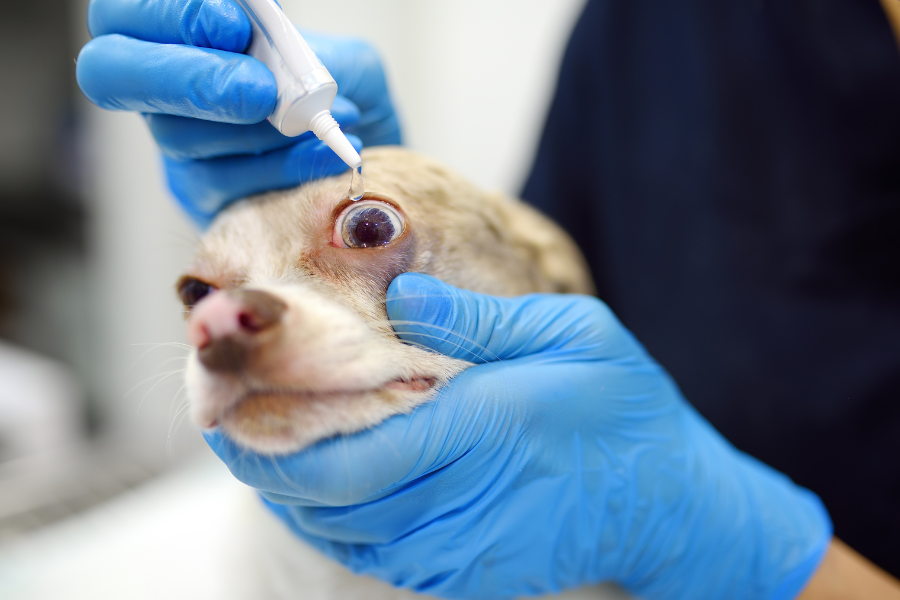
A veterinarian will examine your pet’s eyes, eyelids, and surrounding tissues. Depending on the symptoms, the examination may include a test using a special dye to identify scratches on the cornea, a tear-production test, or measurement of pressure inside the eye.
The tests help identify the cause rather than simply treating the redness. Treatment may involve prescribed eye drops, pain relief, or other care depending on the findings. Some injuries or deeper eye conditions may require referral for additional evaluation.
A hypothetical example
Imagine a dog named Daisy who returns from a walk with one red, watery eye. Daisy keeps squinting and tries to rub her face against the sofa. Her owner contacts a veterinary clinic rather than using leftover eye drops, and the veterinarian examines the eye for a possible scratch and recommends treatment based on the findings.
This is a hypothetical example, not a report of an actual patient. It illustrates why eye discomfort after outdoor activity deserves attention, even when the injury is not obvious.
Follow your veterinarian’s instructions carefully and give prescribed medication for the full recommended period. If your pet’s eye becomes more painful, develops new cloudiness, or does not improve as expected, contact the clinic again. Do not stop treatment or change the dose without professional guidance.
When Should You Seek Urgent Veterinary Care for an Eye Problem?
Seek urgent veterinary care if your pet has sudden, severe eye pain, cannot open the eye, has a visibly injured eyeball, or develops a sudden change in vision. A cloudy eye, an unusual pupil, significant swelling, or a possible chemical exposure also needs prompt assessment.
Contact a veterinarian promptly if you notice:
- Persistent squinting or repeated pawing at the eye
- Sudden redness with swelling or discharge
- A scratch, cut, or possible object in the eye
- A cloudy appearance or a change in pupil size
- Swelling that is worsening rather than improving
- Signs of pain after a fight, fall, or outdoor activity
Do not wait for every symptom to appear. Some eye conditions cause lasting damage if treatment is delayed, and pets may hide pain until the problem becomes more serious.
If your pet has a mild change but remains comfortable, contact your veterinarian for advice rather than assuming it will clear on its own. When in doubt, describe the symptoms and follow the clinic’s recommendations for timing.
Conclusion
Sudden eye redness or swelling in pets may be caused by irritation, allergies, injury, infection, or a more serious eye condition. Watch for squinting, discharge, cloudiness, pawing at the face, and changes in vision. Avoid human eye drops and home remedies, and do not try to remove an object stuck to the eye. Contact a Southampton veterinarian promptly when symptoms appear, and seek urgent care for severe pain, visible injury, or sudden vision changes. Call Olde Towne Animal Hospital at 631-283-0611 as they encourage pet owners to act early when their pet’s eyes look or behave differently. Prompt assessment can help identify the cause and protect your pet’s comfort and sight.
FAQs
Q1: Why is my dog’s eye suddenly red and swollen?
A: Possible causes include irritation, allergies, conjunctivitis, an injury, or a more serious eye condition. Because these problems can look similar, contact a veterinarian for advice, especially if your dog is squinting or seems uncomfortable.
Q2: Can a cat’s red eye clear up on its own?
A: Some mild irritation may improve, but redness can also indicate an injury or illness that needs treatment. Do not assume it will resolve without care, particularly if your cat has discharge, swelling, or trouble opening the eye.
Q3: Can I use human eye drops on my pet?
A: Do not use human eye drops or leftover medication unless your veterinarian specifically recommends them. Some products may be unsuitable for your pet’s condition and could make certain injuries worse.
Q4: When should I seek urgent care for my pet’s swollen eye?
A: Seek urgent care for severe pain, a visibly injured eye, sudden vision changes, marked cloudiness, or significant swelling. Persistent squinting or a suspected scratch also warrants prompt veterinary advice.
Q5: Can Olde Towne Animal Hospital assess my pet’s red or swollen eye?
A: Olde Towne Animal Hospital can assess eye symptoms and recommend appropriate next steps. Contact the clinic when you notice sudden redness, swelling, discharge, or signs of discomfort, and describe when the symptoms began.