

Protect Your Pet’s Smile With Expert Dental Care
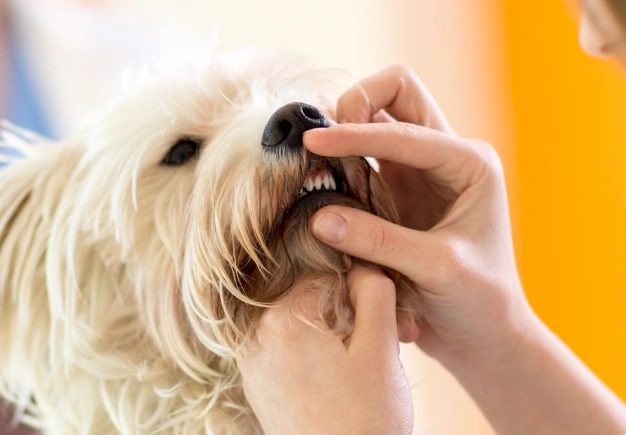
Your pet’s oral health shouldn’t be neglected, as many pets explore the world with their mouths. We’ll help keep your pet’s mouth, teeth, and gums in tip-top shape while providing you with the knowledge to provide excellent at-home dental care. The vets at Olde Towne Animal Hospital provide preventive and restorative pet dental health care and surgery for pets in Southampton and the surrounding areas.
Dental Examinations
Just as a person’s overall health is affected by their oral hygiene, so is an animal’s. To keep your pet happy and healthy, make sure you schedule dental examinations at least once a year. This way, you can take advantage of regular cleanings and help your pet avoid the discomfort of poor dental health.
When an animal suffers from poor oral hygiene, the results can range from bad to worse. You may begin to notice these issues over time:
- Foul breath
- Plaque build up
- Sore and/or bloody gums
- Tooth decay
- Tooth loss
- Loss of appetite
To avoid these types of problems, bring your pet in yearly. At your pet’s dental examination, we will assess its teeth, gums, and jaw. If there are problems, he can advise you on how to best handle them. Furthermore, the team at Olde Towne Animal Hospital can help you create an at-home care plan so you can prevent dental issues from home. Get in touch to schedule an examination today.
Digital Dental Radiography
X-ray machines use small amounts of radiation to create an image of the hard structures of the mouth. In pets, we use this technology to see through tissue and gain a better idea of what’s happening inside the animal’s teeth and underneath its gums.
A lot of animals hide their pain as an innate defense mechanism. In other words, your pet could have dental pain and disease without letting you know. At Olde Towne Animal Hospital, we use X-ray technology to identify and treat these hidden issues.
Usually, we recommend that pet owners schedule an appointment for dental radiography once a year. If, however, your pet is experiencing any worrisome symptoms – like infected gums, broken teeth, or consistently bad breath – we recommend that you come in sooner.
Although the procedure is perfectly safe, your pet will need anesthesia to ensure that he remains still. Please call our office if you have any questions about anesthesia or our X-ray services.
Dental Cleanings
We recommend that you brush your pet’s teeth daily – or three times a week at the very least. That’s because brushing an animal’s teeth is no less important than brushing your own.
To capitalize on these healthy habits, you should also schedule yearly dental cleanings at our animal clinic. Most often, we will need to administer anesthesia to perform the cleaning and rid the teeth of plaque and tartar. This will allow us to perform thorough work and watch for any signs of concern. You can typically expect the dental cleaning appointment to last for most of the day.
From start to finish, the cleaning consists of these steps:
- Removal of tartar with a hand scaler
- Cleaning above the gum line with an ultrasonic scaler
- Polishing of teeth
- Cleaning of gums
- Application of an antibacterial solution to protect against tartar
Of course, if we notice any loose teeth, decay, or other dental health issues, we will speak with you before moving forward with further treatment.
At-Home Dental Care
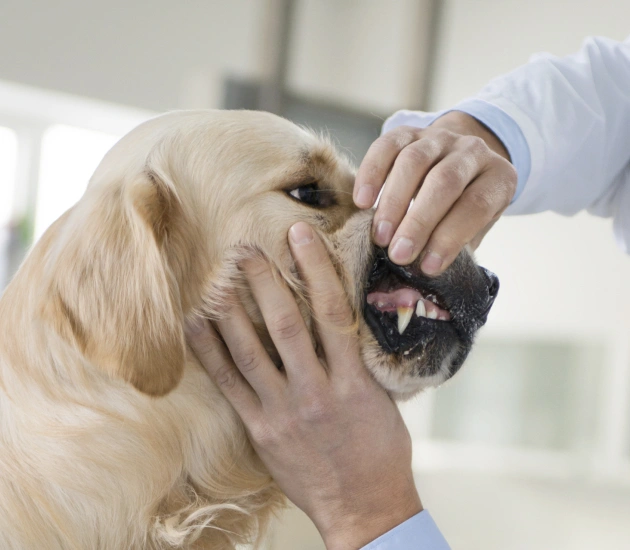
Periodontal disease is caused by plaque – a common but harmful film of bacteria that coats the teeth. Fortunately, plaque can be greatly reduced with proper and frequent brushing. Follow these tips to create an at-home dental care plan and help your pet avoid unnecessary disease:
- Buy quality supplies like brushes and toothpaste that are designed with your pet’s species and breed in mind. Remember that human toothpaste is often toxic to animals.
- Brush your pet’s teeth in a calm and brightly-lit area. This way, you can help your animal stay focused.
- Reward your pet with praise and treats each time you brush. This will help him become more comfortable with the experience as you both build healthy habits.
The team at Olde Towne Animal Hospital wants to work with you to create an at-home dental care routine. If you have any questions, please don’t hesitate to get in touch.
